
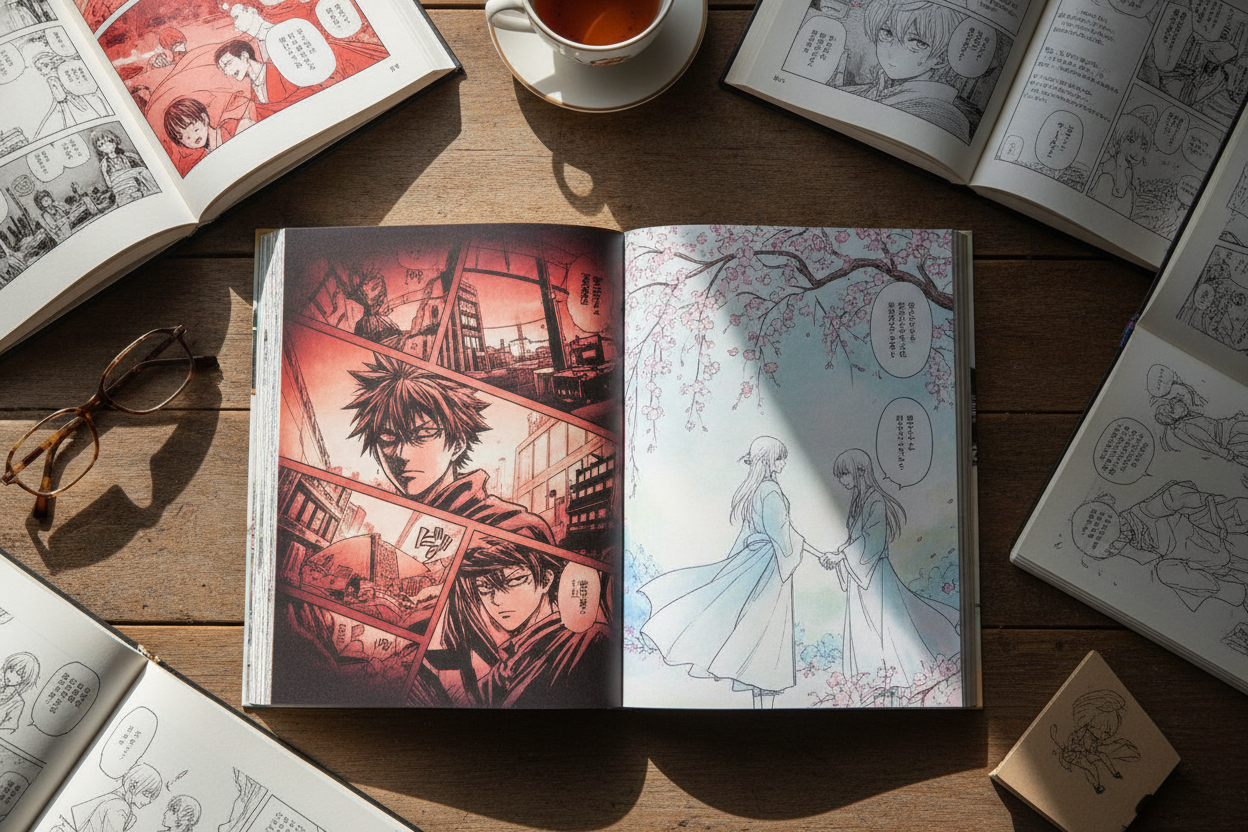
Manga does more than tell a story. It creates a mood through line work, pacing, composition, and the emotional rhythm of each page. That atmosphere is a big part of why readers keep turning pages. Even before a character speaks, the visual language of the art can signal tension, humor, tenderness, or suspense.
For readers who love manga, the experience often begins with a feeling. A silent panel can hold more emotion than a long speech. A dramatic angle can make a simple moment feel urgent. Angel Neesan’s interest in manga storytelling reflects that idea: art and mood work together to guide the reader through the emotional landscape of the story.
One of the most effective tools in manga is contrast. A bright, energetic scene can make a later quiet moment feel deeper. A playful expression can soften the impact of a serious reveal. This contrast keeps the reading experience dynamic and prevents the tone from becoming flat. It also helps readers remember key scenes more vividly.
Mood matters in prose too. Even without panels, a story can borrow from manga’s sense of visual drama by using strong imagery, precise timing, and scene structure that feels cinematic. That approach can make a book feel fast, expressive, and highly immersive.
For fans of both manga and fiction, this blend of visual and written storytelling offers the best of both worlds. It creates a world that feels alive on the page and emotionally immediate to the reader. That is one reason manga-inspired work continues to connect with such a wide audience.
Leave a Reply